Commercial Waste Oxford — Recycling and Sustainability
Our Commercial Waste Oxford strategy focuses on creating an eco-friendly waste disposal area across the city and surrounding boroughs. We work with businesses of every size to establish practical routines that reduce landfill and increase reuse. This page describes targets, local transfer stations, charity partnerships and our low-carbon vans that help deliver a greener sustainable rubbish area.
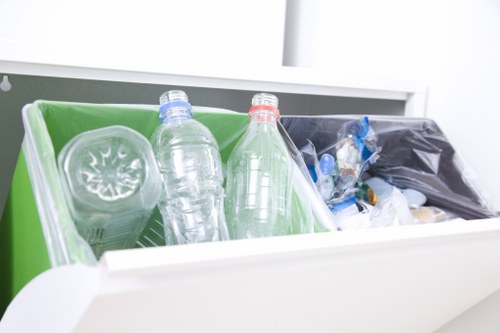 We set a clear recycling percentage target to drive continuous improvement: by 2030 we aim for a 70% recycling and reuse rate for commercial collections, with interim targets of 50% by 2026 and 60% by 2028. These targets apply to mixed commercial streams and specific streams such as food waste, paper, glass and segregated construction wastes handled across Oxfordshire.
Local Transfer Stations and Civic Facilities
To achieve these goals we route material through a network of local transfer stations and civic amenity sites serving the city and county. Our approach utilises nearby transfer facilities to minimise haulage distance, which reduces emissions and supports an eco-friendly waste disposal area. The network includes municipal transfer points and commercial consolidation hubs to optimise loads.
We work in concert with boroughs’ approaches to waste separation: many councils encourage separate streams for food, paper, glass, plastics, textiles and small electricals. Our collections can mirror those household and borough separation schemes, helping businesses follow the same practical separation methods and reducing contamination rates.
Recycling Streams and On-Site Separation
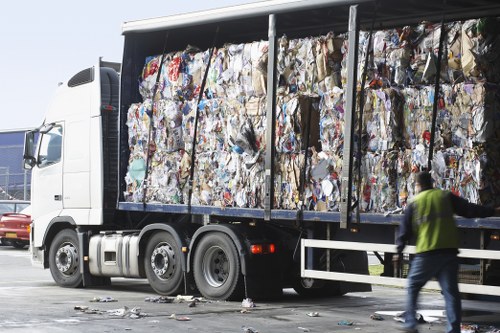 In the Oxford commercial waste context we emphasise source separation and targeted recycling activities relevant to the area, such as:
- Paper, cardboard and office paper collections for local pulping and reuse
- Glass and mixed containers separated for specialist reprocessing
- Food waste diverted to anaerobic digestion or composting facilities
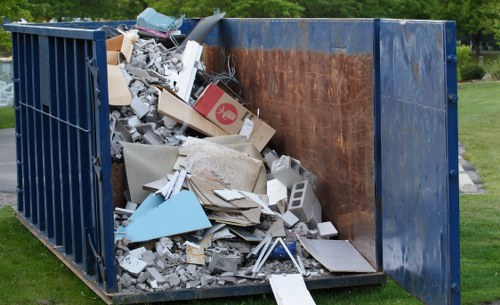
- Construction and demolition (C&D) streams: concrete, timber and metals sorted for recovery
These steps create a practical sustainable rubbish area in workplaces, retail sites and hospitality venues. We recommend clear signage, colour-coded bins and regular audits to keep contamination low.
Partnerships with charities and reuse organisations are central to our circular approach. We collaborate with local charities, social enterprises and small-scale refurbishers to divert furniture, textiles and functional electrical items from the waste stream. Through redistribution agreements we ensure items in good condition are offered to community organisations before being processed for recycling.
Oxford commercial waste services prioritise reuse pathways: surplus office furniture goes to training providers, unsold retail stock is redirected to charities, and usable catering equipment is passed to community kitchens. These partnerships lower disposal costs, create social value and extend product lifecycles.
We also support repair cafés and refurbishment hubs by providing sorted collections of reusable components and small appliances, enabling community projects to benefit and reducing the need for virgin materials.
To lower operational emissions our fleet includes low-carbon vans and electric vehicles for short urban routes, plus Euro VI hybrid options for heavier loads. Route optimisation software reduces mileage and idle time so that our commercial waste in Oxford collection runs are as efficient as possible. These measures feed into an overall carbon reduction plan that we track annually.
Low-emission vehicles are phased in across the fleet, with charging strategies coordinated with local power suppliers and on-site depot infrastructure to ensure resilience. We plan to increase the percentage of zero tailpipe emissions collections year on year and publicly report progress against our carbon reduction targets.
In addition to vehicle improvements, we invest in training for drivers and site staff on eco-driving, load consolidation and segregation best practices to further cut fuel use and emissions during each collection cycle.
 Transparency and measurement underpin everything we do. We provide regular reporting on diversion rates, carbon intensity per tonne collected, and progress against our 70% recycling target. Data is segmented by stream so businesses can see how paper, glass, food, and C&D materials perform independently and where improvements are needed.
 Our sustainability programme also includes periodic waste audits, benchmarking against regional borough performance metrics, and collaborative improvement plans with customers. When businesses adopt the same separation standards used by local councils the outcomes improve markedly: higher capture rates, lower contamination and better value from recyclates.
In summary, Commercial Waste Oxford combines ambitious recycling targets, efficient use of local transfer stations, charity partnerships for reuse and a low-carbon vehicle fleet to create a replicable model for an urban eco-friendly waste disposal area. We commit to continuous improvement, transparent reporting and working with partners across the city to build a truly sustainable rubbish area for businesses and communities alike.
